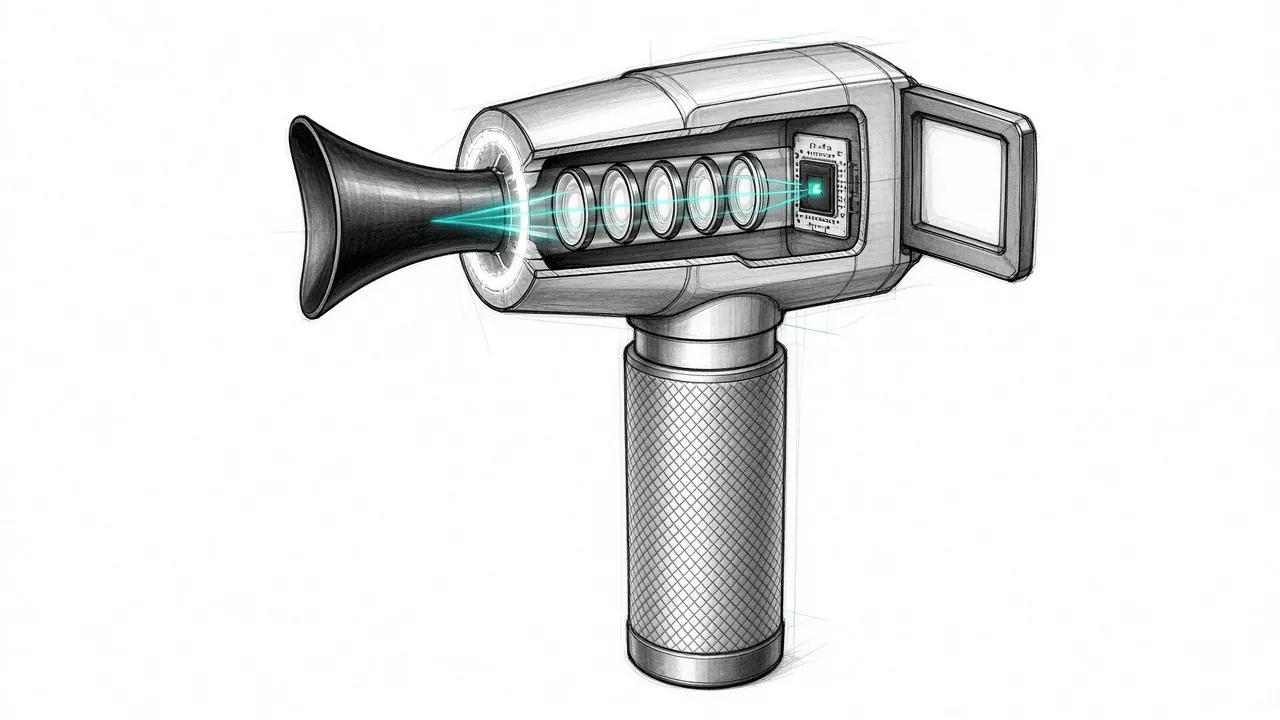
20+ years in optical design
Fixed-fee imaging lens and illumination design, Austin, TX
Shape the flow of light.
Analysis, tolerancing, and CAD-ready handoff for medical, sensing, and space.
Services
Imaging lens design and illumination design
Each practice can stand alone or combine into a single fixed-fee engagement.
Imaging lens design
First-order layout through aberration analysis and tolerancing.
Sequential models cover visible, NIR, and custom spectral bands.
Zemax OpticStudio, Quadoa, LensHH, and OpTaLiX.
Illumination design
Source-to-target mapping, light pipes, reflectors, and luminaire optics.
Models report collected flux and uniformity, including freeform surfaces when a symmetric optic cannot meet the target.
Photopia, FRED, TracePro, and Zemax OpticStudio.
Supporting work: optomechanics, stray light, OpticStudio model help, and independent design review.
Why teams come to us
No optical engineer on staff.
You get one experienced optics lead for a fixed fee, scoped in writing before work starts.
Stock optics don't fit the package or the spec.
We design the custom lens, light guide, or reflector, freeform included when a symmetric optic falls short.
Tooling is next and you want a second look.
An independent design review checks the model and tolerances before you commit to a vendor RFQ.
Client quotes
"[He] really knows his way around the Photopia software and helped us immeasurably in our product design phase. We were able to try out dozens of design changes and tweaks without needing to physically prototype a single one."
Client, UV-C fixture design "[His] knowledge of all things lighting and optical is nothing short of encyclopedic. He's a great communicator, listener, and pleasure to work with."
Client, compact LED flashlight optics "...the results provided from his work vastly improve the end product."
Client, independent project review "Dealing with a highly technical issue but explained each step and produced an excellent result within the agreed time frame."
Client, automotive lamp optic "Amazing at communicating technical knowledge in an approachable way. Gave a lot of useful information regarding manufacturing preparation."
Client, optics consultation
Work
Case studies
Anonymized projects. Client names are withheld.
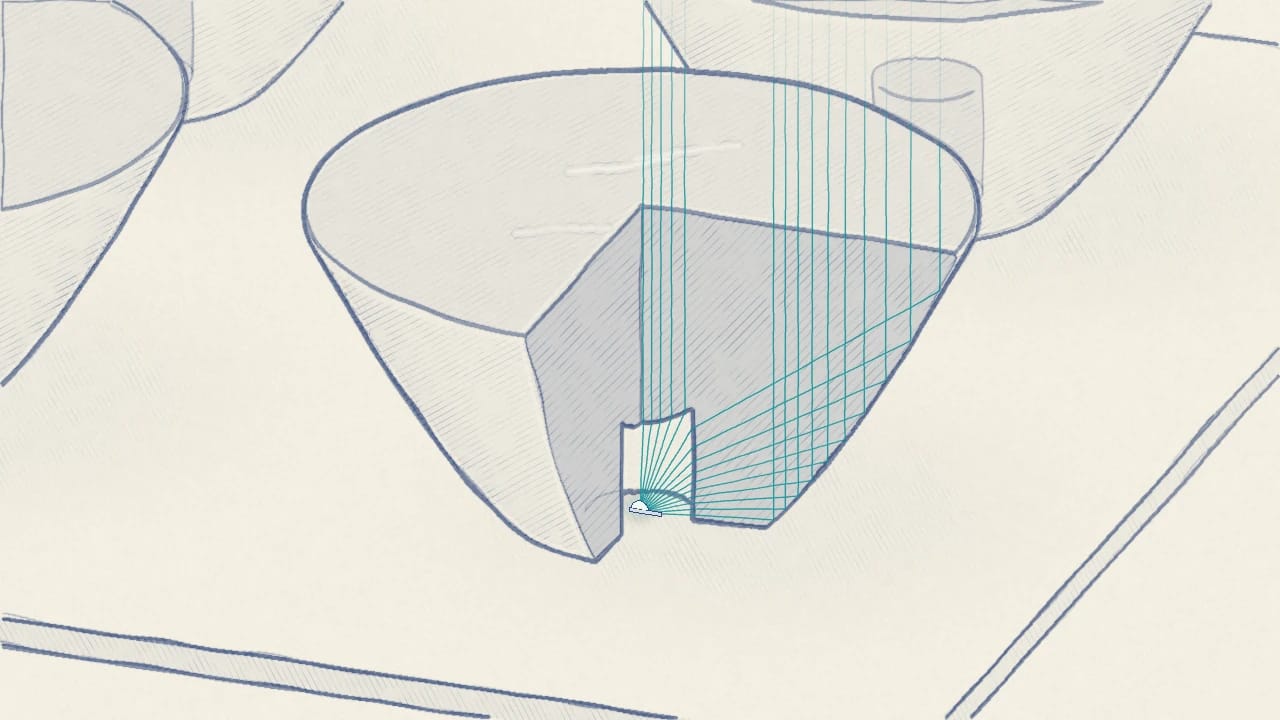
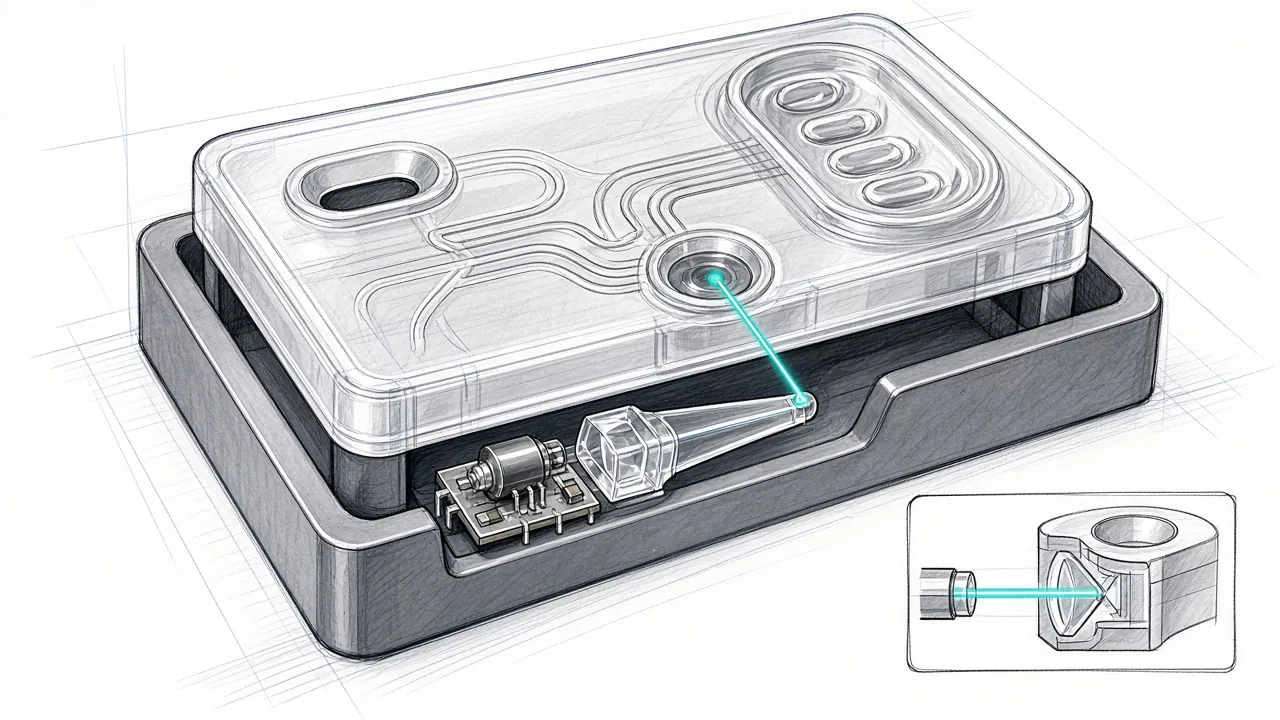
25% to 90%
optical efficiency into the detection area
Laser light delivery for a diagnostic test cartridge
How it works
Four steps, then a clean handoff
AI-accelerated, human-reviewed. Agents and solvers compress exploration, analysis, and documentation. Formlight Optics reviews every deliverable. This is not a black-box design bot.
01
Inquiry
Send the wavelength band, the source or detector, and the decision you need. Formlight Optics replies within two business days.
02
Scope
A written note covers assumptions, deliverables, and the fixed fee. Work starts after you agree.
03
Analysis
Layout, merit function, and tolerances run against the agreed spec. AI shortens the exploration loop where it helps.
04
Handoff
You receive native files, STEP or IGES geometry, and a written report.
FAQ
Practical questions before you write
- Do you use AI?
- Yes, for acceleration and exploration. Formlight Optics retains engineering judgment and reviews every deliverable. There are no unsupervised client deliverables.
- What tools do you use?
- The tools are listed on the services page. Native files and exports are named in the scoping note.
- Do I get native files?
- Yes. The agreed package includes native models from the named tool, not screenshots or a locked viewer.
- Do you sign NDAs?
- Yes. NDAs are routine. Client geometry, source data, and results stay with the engagement.
- Do you manufacture optics?
- No. This is design and analysis. The handoff is for your mechanical team or a fabricator you choose.
- How long does an engagement take?
- Fixed-fee projects. Scope, deliverables, and price are agreed in writing before work starts. Duration is written in the scoping note and depends on model complexity and the decision you need.
- What should the first email include?
- Wavelength band, source type or detector, constraints you already know, any existing models or drawings, and the decision the work needs to support.
Send the wavelength band, the source or detector, and the decision you need.
Start an inquiry